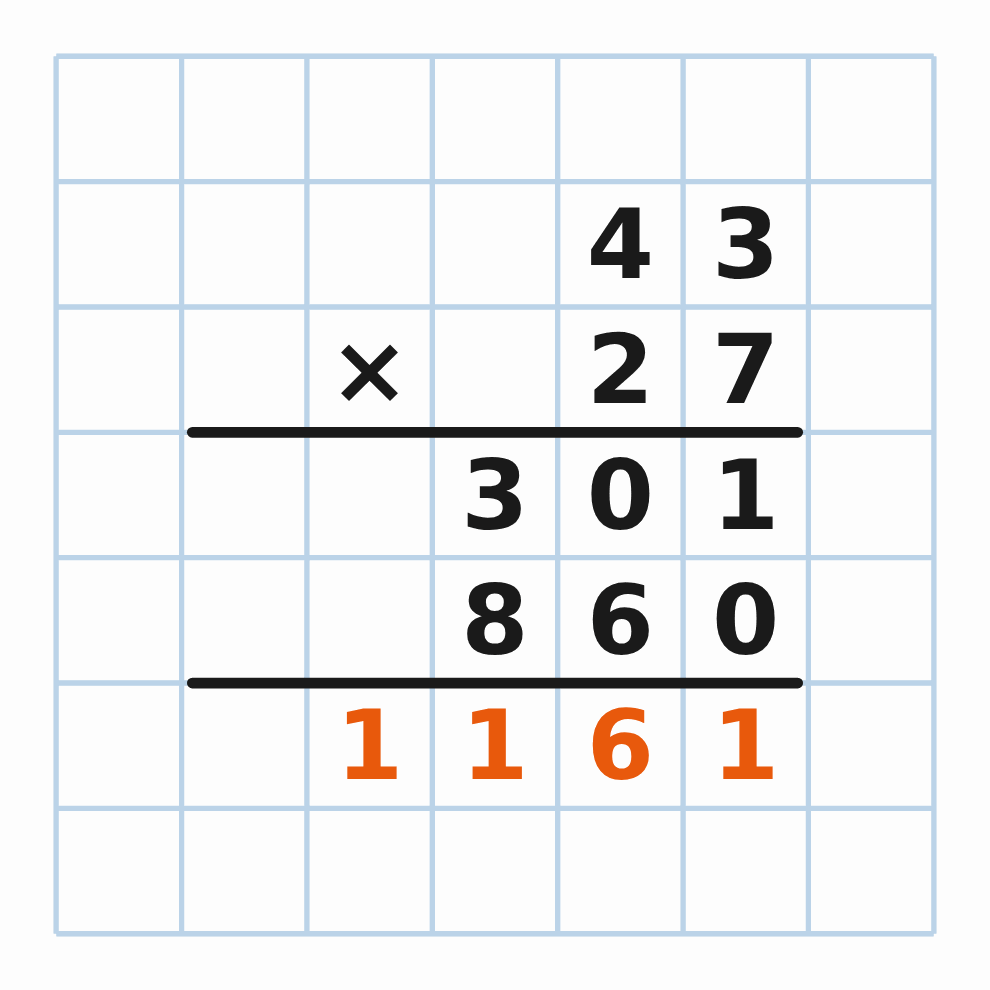
In fifth grade you already know how to multiply a multi-digit number by a single digit. The next step is multiplying two multi-digit numbers — for example or . The same trick works: split the bottom factor into separate digits, multiply the top factor by each one, and add the partial results.
What you will learn
In this topic you will work through:
- The principle of long multiplication – why we split the bottom factor and shift each partial product.
- Step-by-step procedure – exactly what to write at each step.
- Worked examples and common mistakes – fully solved problems and the slip-ups to watch for.
A quick look at the layout
For you write the factors below each other and one partial product per digit of the bottom factor:
The first partial product () sits in the ones-and-up columns. The second one () is shifted one place to the left because the digit it represents is in the tens column. Adding both lines gives the answer.
Why does it work?
Splitting into its place values is the key:
So multiplying by is the same as multiplying by and writing the result one place to the left. That is exactly the shift you see in the column layout.
Practise
When you are ready, try the interactive exercise:
- Long multiplication with multi-digit numbers – generates two factors of 2–4 digits, with empty fields for every partial product and the final sum.