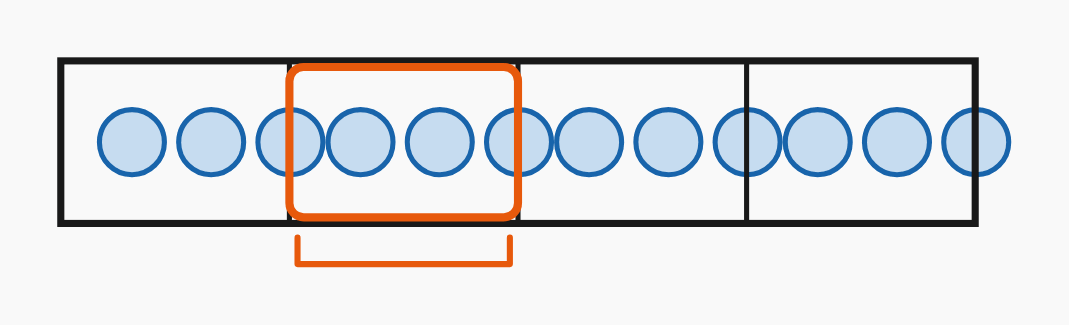
You often need to find a part of a whole — for example 3/5 of £200, or 2/3 of a class. You work out a fraction of a quantity in two simple steps.
The main rule
Fraction of a quantity = (the amount divided by the denominator) multiplied by the numerator.
First find how big one part is (divide by the denominator), then take as many parts as the numerator says.
Step by step
Work out 3/5 of 200.
- Divide by the denominator: 200 ÷ 5 = 40. (One fifth is 40.)
- Multiply by the numerator: 40 · 3 = 120. (Three fifths is 120.)
Result: 3/5 of 200 = 120.
A second example
What is 2/3 of 27 students?
- 27 ÷ 3 = 9 (one third is 9 students).
- 9 · 2 = 18.
Result: 2/3 of 27 = 18 students.
Why it works
The denominator says how many equal parts you split the whole into. Dividing finds the size of one part. The numerator says how many of those parts you take — that is why you multiply.
Checking your answer
- The whole thing: if the fraction is 5/5, the result must be the whole amount (5/5 of 200 = 200). ✓
- Estimate the size: 3/5 is more than a half, so 3/5 of 200 must be more than 100 — and 120 is.
Common traps
- Swapping the steps. Divide by the denominator first, then multiply by the numerator. (For 3/5 of 200, not 200 · 5.)
- Trying to multiply by the whole fraction at once. It helps to split it into two steps: one part first, then that many parts.